As AI adoption grows increasingly pervasive across wealth management, more solution providers are leveraging the verbal safety net of “human in the loop” to establish trust and credibility.
However, many aren’t explaining what it means, asking firms and advisors to bet client outcomes and their reputations on AI tools without a real understanding of how the outputs are generated or validated.
One Phrase, Three Different Definitions
The original meaning of human in the loop describes how the model itself was built. Experts review real documents and label what “correct” looks like: a tax return line item, an estate document clause, an insurance policy term. The model learns from that professional judgment instead of guessing from raw data alone. That’s training-time supervision, and it’s the oldest and still most common meaning of the term.
The second meaning comes into play after the model is already built. Experts review the output, correct what it gets wrong, and rank answers by accuracy. Corrections get fed back into the system, sharpening it over time. This is closer to what most people mean when they talk about AI getting smarter with use, and it’s often called reinforcement learning from human feedback.
A third definition of “human in the loop” is gaining traction. As AI agents start taking real actions, sending emails, booking meetings, moving money, the human’s job shifts from teaching the model to approving what it’s about to do in the real world.
Definitions one and two are designed to improve output quality, while the third is meant as an approval gate to help avoid unintended consequences.
On its own, the third definition is risky because it says nothing about how the model got smart enough to make the recommendation an advisor is now approving in the first place. A solution provider can build a model with zero expert involvement in training, feed it messy or unvetted data, and still market “human in the loop” honestly, simply because an advisor clicks approve before an email goes out. The phrase itself covers the click but with no insight into what the model learned or from whom. This raises a red flag and one firms and advisors need to be aware of.
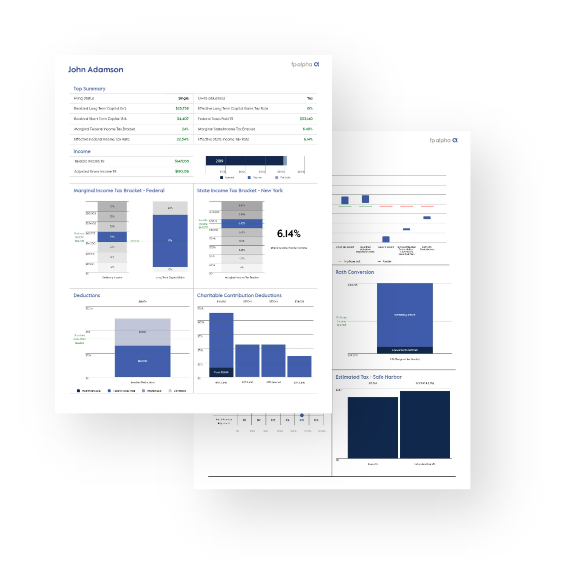
Take a tax planning tool that flags a Roth conversion opportunity and drafts a client email recommending it. A careful advisor won’t just hit approve; they’ll check the client’s current and projected tax brackets, confirm the conversion doesn’t push the client into a higher IRMAA bracket, verify the state tax treatment, and cross-reference the recommendation against the client’s broader financial picture.
But the review is only as good as the advisor’s ability to catch what’s wrong. If the model was trained without expert human input, the error may not be obvious. A flawed assumption buried in the calculation, an outdated tax rule, or a misread filing status can slip past a diligent advisor because the recommendation itself looks reasonable. The advisor is still doing the work. They’re just doing it downstream, catching errors that expert-validated training would have caught before the recommendation ever reached them.
Advisors using AI should validate which of the three human in the loop descriptions or version a provider is describing. A model trained by experts is not the same claim as a model that pauses before it acts, and conflating the two oversells what a tool can be trusted to do on its own.
The Questions Firms and Advisors Should Be Asking
Asking whether a platform has a human in the loop isn’t a useful question, because too many variations can make that technically true. Be more specific:
- Who trained the model, and what were their credentials?
- What data did they train it on?
- At what point in the process were humans involved: before the model shipped, after it shipped, or only when an action is approved?
- Where were humans not involved at all?
For example, at FP Alpha, we communicate clearly that we leverage the first two definitions of human in the loop today. Over 70 attorneys, CPAs, and CFPs trained the models across key planning disciplines, and specialist review continues to catch and correct edge cases as they come up. This, in turn, affects our performance. Our extraction tax engine runs at 99.8% accuracy, well above the 60% to 93% range typical of general-purpose AI models adapted for tax return data.
Precision Matters in Wealth Management
Our industry is not the place to be cavalier about a term that implies more safety than a product really has. If a provider tells advisors their AI has a human in the loop, advisors deserve to know whether that means the model learned from real experts, whether experts are still correcting its mistakes, or whether a person is standing between the AI and an action with real consequences. Vague language lets a provider imply whichever one sounds best without committing to any of them.
With client outcomes and firm reputation hinging on planning precision, firms and advisors deserve complete transparency into the kind of human oversight their AI has, so they can make fully informed decisions about the tools they use. Make sure you fully understand which definition of “human in the loop” is being used before you implement anything.
See How FP Alpha Defines Human-in-the-Loop
Bring the questions from this article to an FP Alpha demo. We’ll show you exactly how human expertise shapes our platform.