Tax planning has become one of the clearest ways advisors demonstrate value. According to Kitces.com, tax planning software is now one of the fastest-growing technology categories among advisors, with adoption approaching 70 percent and satisfaction scores among the highest of any planning tool.
Even so, many advisors still experience tax planning as reactive. The conversation often centers on last year’s return, a quick look at brackets, and a note to revisit things later in the year. Clients increasingly expect more than that.
Moving Beyond the Annual Tax Review
Research from Morningstar consistently shows that tax efficiency ranks among the top drivers of perceived advisor value, particularly for higher-net-worth households. Cerulli data echoes this, with a majority of affluent clients rating tax planning as very important to their relationship with an advisor.
Next-level tax planning shifts the focus from reviewing what already happened to preparing for what comes next. It is proactive, scenario-based, and connected to the rest of the financial plan.
The Building Blocks of Strong Tax Planning
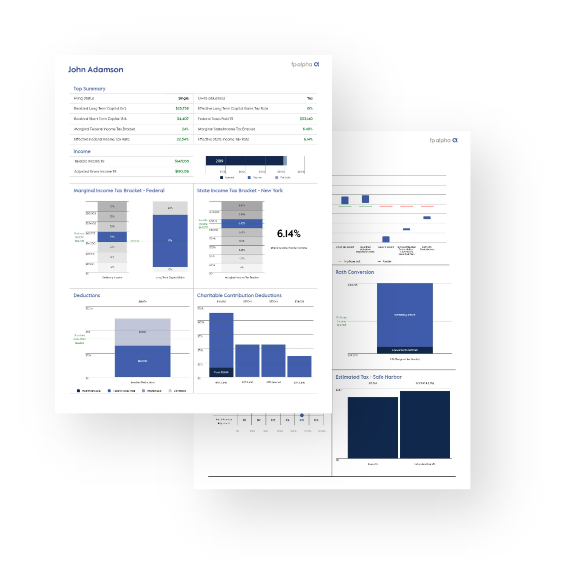
First, advisors need fast visibility. That means understanding income sources, MAGI thresholds, capital gains exposure, QBI eligibility, and charitable efficiency without manually dissecting every return. When this information is easy to access, conversations start sooner and with more confidence.
Second, scenario modeling matters. Clients rarely act on raw data, but they do respond when they can see options side by side. Modeling Roth conversions, income timing, or charitable strategies makes tradeoffs tangible and decisions easier.
Third, tax insights work best when they connect to other planning areas. A Roth conversion affects Medicare premiums, estate outcomes, and beneficiary taxation. Charitable strategies influence legacy planning. When tax insights sit inside a broader planning context, advice feels more cohesive and relevant.
Why This Changes Firm Economics
Despite strong demand, fewer than half of advisory firms deliver tax planning in a consistent, repeatable way. Firms that do, tend to see stronger engagement, higher retention, and deeper wallet share.
Tax planning also creates year-round relevance. Advisors are no longer limited to one annual touchpoint. They can reach out when income changes, legislation shifts, or life events occur, all without making the conversation feel forced.
Simpler Communication Wins
Advanced tax planning often sounds complex, but most clients are not asking for more detail. They want clearer explanations and practical options.
FP Alpha’s NextGen Tax Insights are designed to surface areas worth reviewing, not to replace CPAs or prescribe tax advice. This framing keeps advisors compliant while still giving clients meaningful guidance.
What It Looks Like in the Meeting
Instead of saying, “We should talk to your CPA,” advisors can say, “Here are a few tax strategies worth reviewing this year, and here’s why they might matter for your situation.” That shift changes the tone of the meeting and how clients perceive the advisor’s role.
Why Firms Are Simplifying Their Tax Tech
Many firms are realizing that adding more tools does not solve the problem. It often makes it worse. Leading firms are consolidating their tech stacks around platforms that save time, reduce friction, and connect tax, estate, and insurance planning in one place.
Strong tax planning is not about becoming a tax preparer. It is about helping clients make better decisions and positioning the advisor as the one who brings the full picture together.
If you’re interested in exploring FP Alpha’s tax planning capabilities, view pricing and request a demo here.