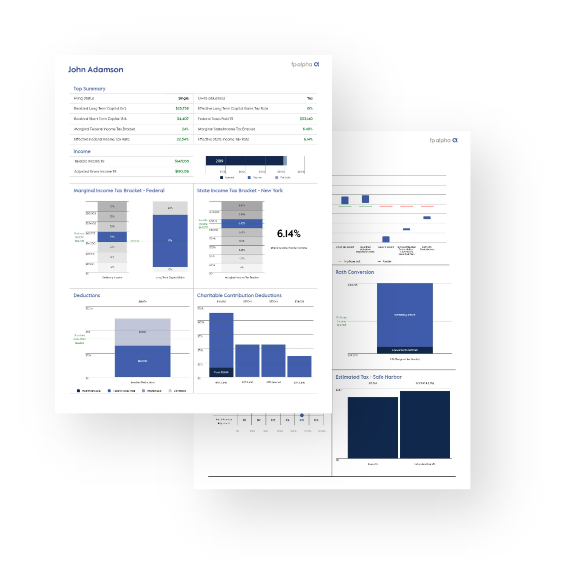
Why clarity, not complexity, drives perceived advisor value
Tax planning often fails not because advisors lack expertise, but because clients struggle to follow the reasoning behind recommendations.
Industry research consistently shows that clarity is a key driver of trust. According to CFP Board and Cerulli studies, clients are more likely to value and retain advisors who help them understand decisions and coordinate across their financial lives.
Turning Analysis Into a Narrative
Rather than showing every calculation, effective tax planning helps explain:
- What decision is being considered
- Why it matters
- How it connects to the broader plan
Advisors who frame tax planning as a narrative help clients stay engaged and confident, even when decisions are complex.
Preparing Clients Beyond the Meeting
High-performing advisors recognize that education doesn’t stop when the meeting ends.
Research from Kitces indicates that clients are more likely to perceive value when advisors provide follow-up materials that reinforce recommendations and summarize next steps. Sharing clear visuals and written summaries after meetings helps clients process information at their own pace and reduces confusion.
Coordination Beats Complexity
One of the most common sources of client frustration is poor coordination between advisors and tax professionals.
Cerulli research has highlighted that clients increasingly expect their advisor to act as a central coordinator. Advisors who provide organized, accurate summaries and track tax-related events throughout the year reduce friction and strengthen trust with both clients and CPAs.
The Experience Clients Remember
Clients may not remember every tax strategy discussed, but they remember how confident they felt making decisions.
Clarity, organization, and foresight define modern tax planning. Advisors who deliver this experience set a new standard that clients increasingly expect from comprehensive financial advice.