Advisor-CPA relationships have always been beneficial for clients, but they can be challenging to build initially. While clients want coordinated advice, CPAs and advisors intentionally maintain clear lines of support, not wanting to step on each other’s areas of expertise. What begins as best intentions can slowly widen holistic financial planning gaps before anyone realizes it’s happened.
On the flip side, for many advisors, CPA relationships are the heart of their referral network. In fact, Michael Kitces and Paul Saganey’s discussion surfaced that more than 70 percent of advisors list CPAs as a top referral source!
Here’s how advisors can build a powerful referral program with CPAs and other centers-of-influence who may drive repeat business:
1. Find Common Ground: Proactive Planning Builds Trust
A lot of advisor-CPA interaction still happens around tax season. By then, everyone is just trying to get through it. There’s not much room for planning, and even less room for collaboration.
When advisors bring something to the table earlier in the year, it changes the tone completely. Instead of reacting to what already happened, you’re talking about what could happen next. CPAs tend to appreciate that more than anything. Not because it makes their job easier in the moment, but because it helps avoid problems down the line. That’s where trust starts to build. Not in big gestures, but by showing up before things get complicated.
2. Provide Clear Summaries To Reduce Friction
If you’ve ever sent information over to a CPA and gotten a delayed response, it’s usually not because they’re ignoring it. Tax questions take time to sort through. They’re running through all the clients’ documents, scattered notes, maybe even unclear data points.
So when you send something that’s already organized, the key pieces are easy to spot, and the conversation moves faster. It doesn’t have to be perfect; it just has to be clear.
Over time, that consistency matters. CPAs start to recognize which advisors are easy to work with. And those are the relationships that tend to stick.
3. Clarify Your Role By Modeling Scenarios
One of the biggest unspoken tensions in these relationships is role confusion. Who is supposed to do what? The simplest version usually works best.
Advisors explore options.
CPAs confirm them.
That might look like walking through a Roth conversion scenario or thinking through how income could be timed differently. You’re not making the final call. You’re framing the conversation.
When that line is clear, things tend to run more smoothly. No one feels like they’re stepping outside their lane.
4. Be Clear About Your Language
This is one of those small things that makes a bigger difference than you’d expect. How something is said matters just as much as what’s being said. If an advisor presents something as “this is what we should do,” it can put a CPA on the defensive.
If it’s framed as “this might be worth looking at,” the tone shifts. Now it’s a conversation rather than a conclusion. And while it sounds simple, this goes a long way in keeping the relationship collaborative instead of competitive.
5. Create Fewer Fire Drills
Everyone has been in those situations where something comes up late and needs to be dealt with quickly. They’re stressful, and they’re rarely where the best decisions get made. A lot of that comes down to timing.
When tax conversations happen earlier, there’s more room to think things through. Less urgency, more intention, and over time, that changes the working relationship. It feels less reactive and more structured.
6. Reduce Friction and Streamline Guidance
Clients can tell when their advisor and CPA aren’t aligned. They may not say it directly, but they feel it. Different answers, repeated questions, things getting lost between conversations.
But when everything lines up, the experience feels completely different. Its cleaner and more straightforward. When clients don’t have to translate between professionals or wonder who to listen to, it builds confidence.
7. Promote Referrals
At the end of the day, referrals come down to trust. CPAs refer advisors who make their lives easier and don’t create extra work. Advisors refer CPAs who are thoughtful and easy to communicate with.
When the relationship works, referrals happen naturally. Tax insights just give both sides more reasons to stay connected throughout the year.
Not just during tax season, but as things change. It’s that consistency that turns a good relationship into a long-term one.
What This Looks Like in Practice
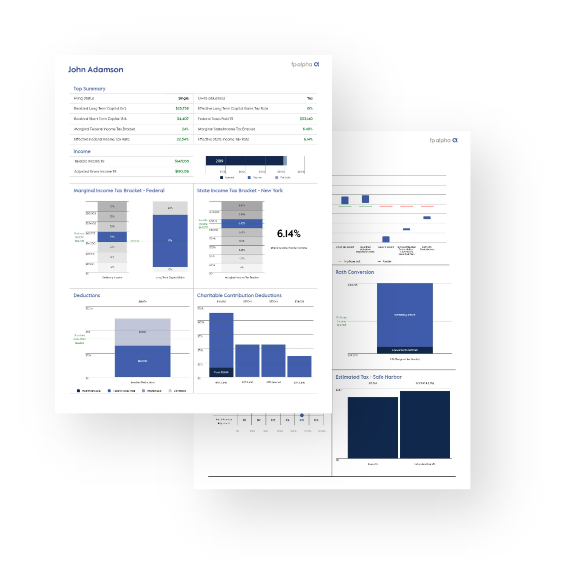
With FP Alpha, advisors come into conversations with something tangible. They bring clear summaries, a few scenarios to walk through, and specific areas to focus on. Instead of asking, “Where should we begin?” the conversation becomes, “Here’s what we’re seeing, what do you think?”
That tends to lead to better discussions and demonstrates to the CPA that the advisor is prepared and thinking ahead.
The Bigger Picture
The best advisor-CPA relationships don’t come from one meeting or one introduction. They build over time through small interactions, consistency, and by making each other’s jobs a little easier.
Better tax insights don’t replace that. They just give both sides a better way to work together.
And in the end, that’s what the client actually experiences.