For years, estate planning lived on the edges of the financial advice process. It mattered, but it rarely felt urgent. It was valuable, but hard to scale. Most firms deferred it to attorneys, reviewed documents only when clients asked, and handled inconsistently across a book of business.
As client expectations evolve, that approach doesn’t work anymore.
Data backs this up: Research indicates that 70% of clients expect estate planning to be a part of their financial plans, and 40% would be willing to switch advisors based on estate planning services. Yet according to Kitces, adoption of estate planning technology hovers around 11%, one of the lowest rates among all specialized planning categories.
The stakes are climbing. Cerulli estimates that more than $120 trillion will transfer between generations over the coming decades, with roughly 70% of heirs changing advisors after inheriting assets.
Estate planning gaps show up as lost client relationships, confused families, and assets that end up with competitors.
Reframing the Estate Planning Conversation: From Taxes and Documents to People
Many advisors still associate estate planning with estate taxes and dense documents, framing that limits the conversation before it even starts. In reality, most estate problems have nothing to do with exemption levels. They surface as outdated beneficiary designations, unclear decision-making authority, poorly coordinated documents, or heirs who have never been part of the discussion about what they’re inheriting.
Certainly, clients aren’t thinking about statutes or provisions. They’re thinking about their spouse, their kids, and what happens if something goes wrong. They want to know that someone they trust understands their situation well enough to ask the right questions. When advisors avoid estate conversations because documents are long or uncomfortable to review, clients feel the impact, even if they don’t bring it up directly.
The Scalability Problem
Traditional estate reviews take too long. Documents are dense, written in legal language, and structured for attorneys, not client conversations. Advisors end up reading page by page, relying on attorney summaries, or skipping the review altogether unless a client insists.
As a result, most clients never receive proactive estate guidance, and firms struggle to deliver a consistent experience across advisors, offices, or client segments. In a world where clients increasingly expect holistic advice, that inconsistency becomes competitive vulnerability.
How Technology Transforms the Conversation
FP Alpha’s Estate Planning Lab solves the scalability challenge, helping advisors understand estate documents quickly and explain them clearly to clients without adding hours of manual work.
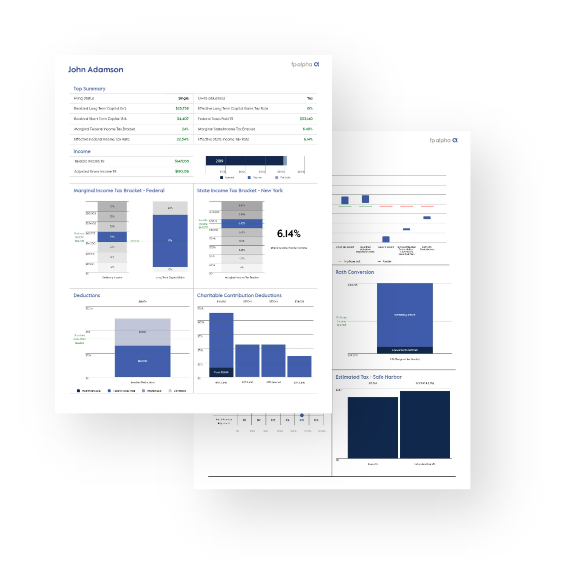
The platform uses AI trained by CFPs and estate planning professionals to read wills, trusts, powers of attorney, and healthcare directives, extracting key provisions automatically and creating visual estate flow summaries showing how assets move, who controls decisions, and where gaps exist.
Instead of walking clients through legal text, advisors can focus on how the plan works, where it might fall short, and where there may be opportunities for improvement.
Visuals Create Critical Context
Behavioral research consistently shows that people make better decisions when information is visual and contextual. Presenting estate planning information in a way that’s clear and easy to understand helps mitigate the anxiety and confusion that can accompany what is at it’s core an emotional process.
Advisors using visual estate summaries often see clients engage more quickly and more openly as the process transforms from intimidating and overwhelming to manageable. Clients are more willing to upload documents, spouses ask better questions, and heirs can follow what’s being discussed, making them more likely to stay involved and maintain a relationship with the firm over time.
Estate Planning as a Practical Growth Lever
When estate planning is done consistently, it strengthens trust, improves retention, and opens the door to deeper collaboration with attorneys and CPAs. It also helps advisors stay central to a client’s financial life rather than peripheral to it.
FP Alpha’s Estate Planning Lab doesn’t replace legal professionals in the estate planning process; instead, it gives advisors a better way to understand plans, ask more relevant questions, and guide conversations with confidence. That makes estate planning easier to deliver, easier to repeat, and far easier to integrate into everyday advice.
Winning the estate game is not about doing more work. It is about doing the right work more consistently, with tools that make complex planning clearer and easier for everyone involved.
Client expectations are only going to keep growing, and the wealth transfer is already underway. Your clients’ heirs will either stay with you or take their assets elsewhere; the work you do now will determine the outcome.